What Is Forex Trading and How Does the Currency Market Operate?
Currencies constantly change hands because businesses, governments, financial institutions, investors, and individuals need to exchange money across borders. An importer may need another country’s currency to pay a supplier, while an investment fund may convert capital before buying overseas assets. Alongside these transactions, market participants buy and sell currencies in response to changing economic conditions and expected price movements.
Anyone asking what is forex trading is therefore looking at a market built around exchanging one currency for another. Unlike buying a share in a company, a currency transaction always involves a relationship between two monetary units. Understanding that relationship explains much of how the foreign exchange market operates.
Currency Pairs Express Relative Value
Currencies are quoted in pairs because one must be valued against another. In EUR/USD, for example, the euro is the base currency and the US dollar is the quote currency. A price of 1.1200 indicates how many US dollars are required to obtain one euro.
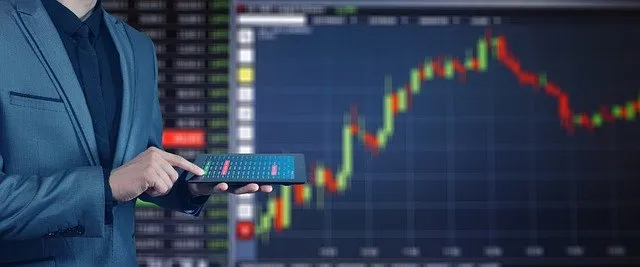
Image Source: Pixabay
If the pair rises from 1.1200 to 1.1300, the euro has strengthened relative to the dollar. The movement does not necessarily mean that every measure of dollar value has fallen. The dollar could simultaneously strengthen against another currency.
Relative pricing makes context essential. Economic developments affecting either side of the pair can influence the exchange rate.
Foreign Exchange Trading Runs Through a Global Network
The currency market does not depend on a single centralized exchange for most transactions. Activity occurs through an international network connecting banks, financial institutions, liquidity providers, brokers, companies, investment managers, and other participants.
Major financial centers become active at different times as the business day progresses across Asia, Europe, and North America. Their overlapping schedules allow currency transactions to continue through most of the working week.
Liquidity is not evenly distributed throughout those hours. Major pairs generally attract deeper activity than less frequently traded combinations, while participation can rise when important financial centers are simultaneously open.
Different Participants Enter the Market for Different Reasons
A commercial company exchanging revenue earned overseas has a different objective from a hedge fund expressing a view on interest rates. Central banks may transact as part of reserve management or currency policy, while financial institutions handle customer flows and their own market exposure.
Corporations often use foreign exchange to support ordinary business. A manufacturer purchasing components abroad may need to secure the supplier’s currency regardless of whether it expects that currency to appreciate.
These competing objectives help explain why price movement cannot always be reduced to a single narrative. Transactions motivated by investment, trade, hedging, financing, and speculation can occur at the same time.
Bid and Ask Prices Create the Tradable Quote
A currency quote normally contains a bid and an ask. The bid represents the price available for selling the base currency, while the ask represents the price for buying it. The difference is the spread.
Spread size can change according to the pair and prevailing conditions. Heavily traded currencies often have narrower spreads during active periods. Around unexpected announcements or periods of limited liquidity, available prices may move apart as providers adjust to increased uncertainty.
Consequently, the price visible on a chart is not the only number relevant to execution.
Exchange Rates Continuously Absorb New Information
Interest-rate expectations, inflation, employment, economic growth, trade flows, fiscal developments, and shifts in risk appetite can all influence currency demand. The effect depends partly on whether new information changes assumptions that were already embedded in the exchange rate.
A strong economic report does not guarantee appreciation. If participants had positioned for an even stronger result, the published figure could disappoint despite appearing healthy in isolation.
That dynamic provides a more complete answer to what is forex trading than describing it purely as buying and selling currencies. It is also a continuous process of repricing one economy and monetary system relative to another.
Before following a currency pair, identify its base and quote currencies, the main trading hours for that pair, the current spread, and the next scheduled events affecting either economy. Those four details establish the operating context behind the price on the screen.